Why Your Best Swims Might Be Decades Away: Masters Icon Tracy Grilli on Late Peaks, Injuries and The Mighty Mermaids, EP 330
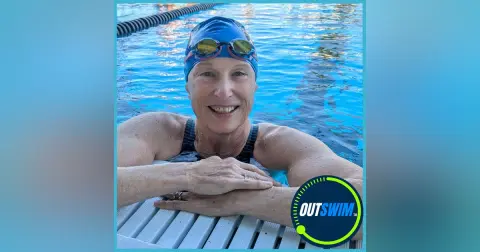
What happens when you don't hit your athletic peak in your teens or twenties, but decades later? In this episode of the Outswim Podcast, Kelly sits down on-deck in Sarasota with US Masters Swimming legend Tracy Grilli. Tracy’s swimming progression is nothing short of incredible: she didn't break a minute in the 100 freestyle until her 40s, didn't break 20 minutes in the mile until she was 50, and at the age of 60, she posted the #1 fastest time in the world in the 1500m freestyle. Tracy share...


What happens when you don't hit your athletic peak in your teens or twenties, but decades later?
In this episode of the Outswim Podcast, Kelly sits down on-deck in Sarasota with US Masters Swimming legend Tracy Grilli. Tracy’s swimming progression is nothing short of incredible: she didn't break a minute in the 100 freestyle until her 40s, didn't break 20 minutes in the mile until she was 50, and at the age of 60, she posted the #1 fastest time in the world in the 1500m freestyle.
Tracy shares the secret to her incredible longevity, how she navigates major medical setbacks (including back fusions, knee replacements, and shoulder tendinitis), and the hilarious, gritty story of swimming the English Channel in her 60s with her famous relay team, the Mighty Mermaids.
The Real Problem This Episode Solves:
- The Plateau & Aging Trap: Many adult athletes hit a certain age and believe their best days are permanently behind them, leading to frustration and burnout. Tracy shatters the myth that aging means the end of personal growth. Her story proves that with consistency, you can achieve lifetime milestones in your 40s, 50s, and even 60s.
- Navigating Major Injuries: When sidelined by surgery or pain, it's easy for swimmers to lose their identity and quit. Tracy provides a masterclass on how to adapt your training (like using sculling to heal tendinitis) and how to stay intimately connected to the community through volunteering and leadership when you can't race.
- The Mental Shift: This episode solves the destructive habit of comparing today's performance to your youth. Tracy introduces the freeing mindset of aiming for your "best time of the day" rather than a "lifetime best."
In This Episode, You’ll Discover:
- The Late Bloomer Advantage: How Tracy went from a self-described "not very good" college swimmer to holding the #1 time in the world at age 60.
- The "Best Time of the Day" Mindset: How to reframe your goals and expectations as you age, completely eliminating race-day disappointment.
- Staying in the Game Through Injury: Tracy's tactical advice for modifying workouts and using leadership roles (like being President of New England Masters) to stay engaged when your body forces you out of the water.
- The Mighty Mermaids: The epic story of Tracy and her relay team tackling the English Channel, and the unforgettable, colorful motivation they received from their boat captain in the final stretch to France.
- Swimming for YOU: Why coming to Masters swimming is the ultimate act of self-care for busy adults, and how doing it entirely for yourself is the secret to never burning out.
Thank you for listening! We want to help you Outswim the age cure, the competition and life's obstacles! We'd be grateful for a review on Apple!
Email us and/or find out more about the host at www.KellyPalace.com. Opinions discussed are not medical advice, please seek a medical professional for your own health concerns.
Why Masters Swimming Is For You
SPEAKER_02When you come to master swimming, you're not doing it for anybody else. You're doing it for you. You're the one that has the busy life schedule. You're the one that makes the decision that you're going to get in the pool and swim. You're the one that makes the decision what set you're going to swim, how hard you're going to swim it. Am I going to go to a swim eat? Am I going to go to an open water swim? You make those decisions. And you're making those decisions, and you've got a busy life. You've got a job and you've got a family and you've got other responsibilities. So when you make the decision that you're going to do master swimming, it's important to you. And then you put that effort in. The effort that you put in is the effort that you get out of it.
Tracy Grilli From Paper Forms To Podiums
SPEAKER_00Hello, friends. Welcome to the Outswim Podcast, formerly the Champions Mojo podcast, where we bring you interviews and topics to help you outswim the age curve, outswim the competition, and outswim life's obstacles. We have conversations especially meaningful for master swimmers and anyone striving to perform better in the water or in life. And now your host, Kelly Pallas.
SPEAKER_01I am excited to be doing an on-deck interview with one of my U.S. master swimming heroes, Tracy Grilly, who swims for the New England Masters NEM, was one of the very first people I ever met in U.S. master swimming because you started back when things were on paper. I think I mailed you my registration. Anyway, Tracy, welcome to the Out Swim Podcast. I'm so happy to be able to talk with you. Today we're at the Shark Tank Short Course Meters Meet in Sarasota.
SPEAKER_02Thank you, Kelly. It's an honor. It's an honor to be asked to be on your podcast. And yes, I started as a master swimmer. I started in 1981 when I was 24. And at that time, you weren't actually able to register for USMS, or it wasn't even called United States Master Swimming because you had to be 25. So I was a submaster. Fast forward to 1996, I was hired as the executive secretary and ran the national office out of my house. And yes, everything was paper, everything was phone calls, and everything was mail. Snail mail.
SPEAKER_01So, Tracy, there's so much we could talk about. And I want to be like hit on some of the high points of your master swimming career from that, starting out that you were a master swimmer at 24. You're now 69. 69. And so it's been 40 years of U.S. master swimming. Give us a quick where you started swimming.
SPEAKER_02So I started uh as the Bearcroft baby at Bearcroft Swim Club in Attleboro, Massachusetts. I passed my two-pool test at two and a half and joined the swim team when I was able to at six. But it was all always very summertime swimming. It was not any any high-level club swimming. It was we did 50s and hundreds. And then fast forward to the age of 16, I got involved with high school sports and I stopped swimming. So then after college, I went and I tried out for the cheerleading squad and I didn't make it. And I tried out for the volleyball team and I didn't make it. And I'm like, I'm 500 miles away from home. I'll join the swim team. Everybody makes a swim team. And that's how I got back into swimming again. And I wasn't very good. I mean, I was just my event was 100 IM. I swam for three years, had knee surgery, managed the men's team my senior year, and then I was introduced to water polo. And then I graduated and got a job and started master swimming at the age of 24. And to be honest, I did not break a minute in the 100 freestyle until I was 44. Wow. And I didn't break 20 minutes in the 1650 until I was 50. And those are my highlights as far as my swimming go. At the age of 60, I was fortunate to have the fastest time in the world in the 1500 long course meters in 2017 because two of my very good friends, Karen Einsteidler and Christy Serrallo, had to scrap. So I swam at Nationals in Minnesota. My time held up, and I ended up having the fastest time. But then after that, it all kind of fell apart with the body falling apart. And yeah, so I'm just enjoying the swimming now, enjoying being with my friends now. And it's not about swimming fast times, it's about swimming and doing my best time of the day.
SPEAKER_01I
Mindset Shifts And Injury Comebacks
SPEAKER_01love that. What would you say initially your biggest obstacle was?
SPEAKER_02I'm faster as a master swimmer than I was as a kid or a college swimmer. So for a number of years, I kept getting faster until say age 50, and then I started getting slower. So the first obstacle was my head, because the expectation was I'm gonna come to a swim meet and I'm gonna do my best time. And as we know, that that doesn't happen as you get older. So that was the first obstacle. The second obstacle, and this is the one that it's that I'm battling with now, is that basically since the age of 60, I've had something major medical happen, like every one year, every two years. So over the last 10 years, I've had major back surgery, then I had knee replacement surgery, and then I had my appendix removed. And then this past year, it's my shoulder. And the good news is it's not a tear, it's not a bone spur, it's not an impingement, but it's tendinitis. And as my physical therapist likes to tell me, you're not young, and it's gonna take a while for it to heal. So this meet that I'm at right now is my test. And this is my first swim meet, my first real swim meet, swimming events since last December. I did go to Nationals, I did swim, I did not do any individual events, I just swim relays. But this is my first meet.
SPEAKER_01Give us a little backstory on what your training has been like with the tendonitis, because I know a lot of people nurse tendonitis in their shoulders. What did you take off? Did you ice? Did you hang? Did you what did you do? And then now that you're doing a test meet, that's very interesting to me. How did you build into this and how did it go? Because you swam the 400 and the 800.
SPEAKER_02Yes, with the 200 and the 100 still to go. So basically, what I was able to do is when I first was injured, I was not able to swim. When I pulled with my left arm, I would have a shooting pain that would radiate down my upper back of my upper arm. But as I was going to the chiropractor and as I was going to physical therapy, I I was getting a little a little bit better, and I introduced sculling. I was able to actually skull with no pain. And so that is how I've gotten through the last year. Is I go to swim meet, I go to swim workouts, and I'll do a lot of skull down, easy freestyle back. Skull down, easy freestyle back. And I feel that kept my muscles strong so that I was able to swim. What I found at this meet here is that I'm not in racing shape. So my 400 was a little uncomfortable, but I was smarter today when I swim my 800. So yeah.
SPEAKER_01And your 400 and 800 without a lot of heavy anaerobic or threshold work. How did you pace that four and eight? Was it just for form, or what were you focusing on?
SPEAKER_02Long. I was focusing on long. I was focusing on long. I was focusing on streamlining off the walls. I was focusing on finishing my pull, because that's one of the skulls that I do is the one at the hips, and that that emphasizes the finish. And I was not uncomfortable. The one thing I do get is cardiovasculars when I'm on my bike. When I ride my bicycle, I am getting the cardiovascular. So even if I'm not getting it swimming, I am getting it in other ways.
New England Masters Community And Leadership
SPEAKER_01So let's talk about New England Masters, which is a big regional team, right? What's going on up there? And you've been a kind of a loyal leading member of that. Give us the down low on the New England Masters.
SPEAKER_02So my husband and I, my husband David and I, we joined in 1981 and we were young. As I say, we were in our 20s, and we were really taken in by the leadership of New England Masters. Some of the old names that you might remember are Jim Edwards or Tom Linden or Bar Clayson or Enid Yurik. I mean, these people were younger than I am now, and they just kind of took us in with a lot of other younger energetics. And I've never left. And I've never left. And the club itself has changed. We are a big regional team of over 1,400 swimmers. We have over 40 workout groups. In New England itself, we have two championship. In the LMSC, we have two championship meets. One is short course meters in the December, and one is at BU, Boston University, and we have short course yards at Harvard in the spring, and we have workout group challenge. So it's the workout groups challenged against the other workout groups and the other clubs, and it's really increased the participation. New England Masters Swim Club, I took over as president three years ago. And that's gotten me through this injury because even though I'm not able I wasn't able to swim, I was able to still be part of the team as the leader, as the president, as the person working on the newsletters and working with my board to send out a monthly newsletter and social media posts, but I also coordinate the relays. That's just a way to get to meet swimmers from all over New England.
SPEAKER_01So I love that. I I think that is something that the longevity that we can have in master swimming. Okay, if I get injured, there are years that you can't swim, there are months that you can't swim. To still be involved in that community as a volunteer and a leader, or just to do relays or just to show up to the meets, I think is a fabulous little kernel to put out there into the world. Tracy, what has this swimming life meant to you? Besides coming in and going your best times in your 40s, you're gonna turn 70 next year. How do you frame it?
SPEAKER_02I can honestly say that it's pretty much been my life since I found it. As a young master swimmer with my husband, who also was a master swimmer, our kids grew up on the swim on the pool deck. Um I was involved with New England Masters on the board at a at a very young age. My husband and I ran a number of meets. Our friends are master swimmers. Then the group that I swim with, I love the people that I swim with at the Arlington Park Pool here in Sarasota. I love the people that I swim with at home at my pool in Londonderry, the penguins. But I love going to swim meets and being with the penguins. The social things that we do, we celebrate birthday parties, we we celebrate birthdays, we do just a we just it's just fun and is healthy. And I don't know where I would be because I don't think that there's anything else out there like this. Yes, there are the masters of sports, but I don't think it's anything like swimming. And what I tell some of the people that swam in college, and they're burned out, they're swimming because their parents tell them to swim, or their coach tells them to swim, there's somebody else telling them what they need to do, it's a college scholar, whatever it is, it's somebody else telling them, and then they're done, and then they quit and they don't ever want to return. And what I tell them is, you know what? When you come back to when you come to master swimming, you're not doing it for anybody else. You're doing it for you. You're the one that has a busy life schedule. You're the one that makes the decision that you're gonna get in the pool and swim. You're the one that makes the decision what set you're gonna swim, how hard you're gonna swim it. Am I gonna go to a swim eat? Am I gonna go to an open water swim? You make those decisions. And you're making those decisions and you've got a busy life. You've got a job, and you've got a family, and you've got other responsibilities. So when you make the decision that you're gonna do master swimming, it's important to you. And then you put that effort in. The effort that you put in is the effort that you get out of it. And there are many people that I know as master swimmers who have actually done lifetime bests. Now, I'm not the exact example because I wasn't that good to begin with. I was a swimmer, but I was successful in doing lifetime bests as a master swimmer. And I think that when you have the right attitude, and the attitude is I'm doing this for me because I want to do it, you can do it too.
SPEAKER_01That is so profound and so true. It's doing it for yourself and choosing the events that that are for you. Because sometimes you you've been on a team and you were pigeonholed as the breaststroker, but you really were a sprint freestyler, but you couldn't get into the sprint-free lane. So you get to swim whatever you want, do whatever you want. I I absolutely love that. And I think even if people don't do a best time, I've never done a best time in Masters because I was very good as a young swimmer, but I still know what a good time is in Masters. You can say, All right, I swim only two days a week, so I'm gonna take this time as a good time. So it's not ever for me about comparing, but I think some people do, some people can, and I think some people were over-trained in their youth, and now they're able to not over-train, and then they
Mighty Mermaids And The English Channel
SPEAKER_01improve. So we've talked about New England masters, the mighty mermaids are famous. Give us the mighty mermaids. That's a really cool thing.
SPEAKER_02Well, the the Mighty Mermaids was the brainchild of Christy Seralo. So she approached me, I think I was 49 years old, something about the Maui Channel. And I'm like, whoa. I said, I'm interested, but I'm not doing Maui Channel. She says, Well, how about Tahoe? I said, Fine, I'll do Tahoe. And then fast forward, I turned 50, I get an email from her, you're 50, you ready to put that relay together? And over a weekend, we had the relay team together. And we just started at Lake Tahoe and we entered the Trans-Taho and we had a blast. And then after it was over, it was like, well, what are we going to do next? And we did Manhattan Island. And so we needed a kayaker. So I said to my husband, Would you be interested in kayaking? He said, sure. So we put the kayak in the truck and down to Manhattan we went. David met all of the mermaids, instantly fell in love, and he's been our mermaid wrangler ever since. In 2019, we swam the English Channel. And then after the English Channel, Jenny Cook was seriously injured with her shoulder and had to have major surgery. And so at that point, we've decided that we're not going to replace any more mermaids. So we are down to five mermaids, but we have a guest mermaid every year.
SPEAKER_01Yeah, yeah. And generally those distances are like kind of 20 miles.
SPEAKER_02So it's about anywhere uh between 20 21 and 25 miles. And we usually do the English Channel rules, which is an hour. So we have the first person slims for six for an hour, then the second person for an hour until the sixth person goes or the last person goes, and then we start all over again until we're done. So when we did the English channel, we did 10 hours 36 minutes. So for the English channel, our boat captain was Lance Orham, who's quite a character. What happened was we were starting, and it was early in our window, and we came out and we came out from the breakwater, and the seas were angry. The seas were angry. It was not a good situation. And we couldn't say anything because if we had said anything and said, we can't do this, it's too rough, then that would have been it. Captain came up, he says, Meet me on deck at 3 a.m. So at 3 a.m., we meet him on the deck, we come out of the breakwater, and it's glass. It was absolute pristine conditions. So because of the rules of the captain or whatever the maritime rules are, he spent the first half of our swim sleeping. And he had his second in command piloting the boat. He comes up from down below, only wearing a pair of cutoff jeans, no shoes, no shirt, with a cigarette. And he comes up and he stretches and he looks around and he's going, You're past halfway. We're old ladies, we're all over the age of sixty, because when we did the English channel, we were all over the age of sixty. He couldn't believe it. He could not believe that we were, and we were like the last boat to start. There were like six boats at the start, and we passed all of them. He was shocked. But the cigarette.
SPEAKER_01He did not know who he was messing with, man. You do not that you guys are mighty mermaids. That is such it's such an inspiration.
SPEAKER_02The captain says to me, I was the fifth swimmer, because I had just had the major back surgery. I'm recovering from a double lumbar fusion the previous year. He says, So you know we're finishing with you. He says, That's France. And I'm like, What? And he says, So this is what you're gonna do. He says, You're gonna get in the water and you're gonna swim your tits off for 20 minutes. And if you're not at shore, then you have to swim even harder. And so I'm like, okay. And so, yeah, so we ended on me. I was the fifth swimmer and we ended on me. But the best part about it was he allowed the other five girls to get in and swim up behind me. On my Facebook page, that's the picture of us in France with our arms up. Once I hit land, the girls were able to come out and then we were able to celebrate. And we all grabbed a rock, stuck it in our suit, and had to swim back to the boat.
SPEAKER_01Oh my gosh, what a great story. So, how long do you see yourself swimming? Like, what's the vision?
SPEAKER_02I don't see how I'm gonna stop because it's not just swimming, it's the people that I'm with. It's all about the people, and so I'm not stopping unless I physically have to stop. The mermaids, we don't have any plan. All I know is our 20th year will be 2028, 2028, because we started in 2008, was our first swim. Wow.
SPEAKER_01I'm gonna have to apply for a guest mermaid position. I've to swim more than 3,000 though, in my practice. I don't think you're gonna have a problem, Kelly. I really don't think that you're gonna have a problem. I don't swim for a straight hour. That would be that would be a challenge. I just have to train for it, but you have to suck it up. I have to, what is it, swim my tits off? Tits off, swim your tits off. You don't have to swim your tits off. All you have to do is swim for an hour. Tracy, you're awesome. And as I set my goals for the future, it it it puts adrenaline like butterflies in my belly to say to you guys, put me on the list of the applications because it scares me. I think people should do things that they're scared of and to think, oh gosh, I would be out in deep open water. Because I'm a pool swimmer. I do a little, I do a little lake here and there, a little calm lake and a cable swim. Yeah, I'm all in. And I think, and this is the beauty of master swimming. And I'm probably gonna I'm gonna cry here, but there's always someone five or ten years ahead of you that is doing something so inspirational and so tough that to think okay, put me on the list, maybe in 2029 I'll do it. But I would be scared, I would be really scared. And I'm just gonna admit that to you, but you guys out there doing that, it's such an inspiration. And anybody listening who's 30, 40, 50, you've got five women out there that are some in their 70s, some late 60s, like you. You're the baby, you're the baby that are out there swimming the English Channel, that are doing this every year, that are gonna keep doing it. That's for me what Masters Athletics is about. It's about saying, look at those people that are doing it. Look at Tracy's doing with back fusion and shoulder pain and and your knee surgery. And this morning I was standing up trying to try to break a national record in the foreigner free, and I miserably failed. But I was so nervous and I thought, this is a privilege. You know what? This is a privilege. So it's a privilege that we get to swim, that we get to put ourselves in the water.
SPEAKER_02Oh, definitely. I just wanted when you s when you say that, Kelly, the good news is that the one thing is you did do your best time of the day. Yeah. And so, and this is what's interesting. So a number of years ago, it was at one of the meets in uh Greensboro. I think it was the first meet that we had at Greensboro, and we're all just talking and just talking about how it used to be a lifetime best, and then it was an age group best. Well, now it's best time of the day. And you know what? It is, because we're doing it. It could have been no time because you didn't do it, but you did it, and no matter how you felt, it was your best time of the day, and let's just move on.
Best Time Of The Day And Farewell
SPEAKER_01So is there anything that I have not asked you that you want to share?
SPEAKER_02For me, again, it's about the people, and I can't believe all of the people that I have met through swimming as a swimmer, as the executive secretary, national office administrator. That's the thing that I met so many people because I was the person I I know I was the person, master swimming. This is Tracy. Can I help you? Because back then that's how you communicated. You communicated by phone. And if you had a question, you called the national office, which was my dining room. And the phone would ring at eight o'clock at night, and I would leave the living room and go into the dining room, and I would answer the phone because it was somebody that had a question that I needed to answer. So I've met so many people. I met Christi Cerrallo, the person who started The Mighty Mermaids, because she called me up because her dog, Winona Whippet, ate her all-American patch, and she wanted a new one. And could I help her with that?
SPEAKER_01And that's what I did. That's such a great way to close this. That's exactly how we met. Like, literally, I called and you answered the phone. Thank you for your service, for your inspiration, your tough spirit, and for being in my swimming community. Well, you were welcome, and thank you for having me.
SPEAKER_00Thank you for listening to the Out Swim Podcast. Would you consider leaving us a five star review on Apple? That's like getting a best time for us. Kelly and our team would be so grateful.