How to Swim at 93 with 7 Heart Stents: Olympic Champion Yoshi Oyakawa, EP 328
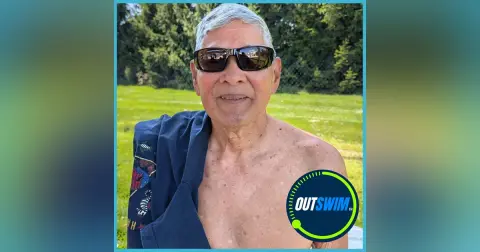


What does it actually take to outswim the biological aging clock when your body, joints, or cardiovascular system start pushing back? How does an athlete continue getting up on the starting blocks well into their 90s after serious heart procedures? Yes, I confirmed Yoshi said he has 7 stents.
In this episode, we sit down on the pool deck with 1952 Olympic Gold Medalist and Masters Swimmer Yoshi Oyakawa. At 93 years old, Yoshi is living proof of lifelong athletic longevity. But his secret isn't reckless grit or grinding through pain—it’s an ongoing masterclass in adapting your training, listening to your body, and completely reframing your relationship with competition.
Whether you’re recovering from a medical setback, fighting shoulder stiffness, or wondering how many more years you have in the pool, Yoshi breaks down the daily philosophy and training shifts required to stay fast, healthy, and on the blocks for life.
Inside this episode, you’ll discover:
- The Cardiovascular Boundary: How Yoshi structures his 600–700-meter workouts to stay fit without triggering breathlessness or cardiovascular overload.
- The Shoulder Longevity Choice: Why Yoshi refused to adopt modern stroke fads—and how sticking to his natural biomechanics preserved his upper body for over eight decades.
- The Pre-Race Mindset Reset: The subtle mental prayer shift Yoshi made that immediately cured race-day anxiety and unlocked peak performance behind the blocks.
- The Power Base Secret: The unconventional childhood dryland routine that built Yoshi’s legendary kick power and sustained his speed late in life.
- The Modern Technique Trap: The biggest equipment and stroke evolutions Yoshi has witnessed over 70+ years of racing—and which technical factors actually matter as you age.
- The Century Mark Goal: Yoshi’s mindset on competing into the 95–99 age bracket, and the pact he made with fellow Olympic legends to race at age 100.
Email us and/or find out more about the host at www.KellyPalace.com. Opinions discussed are not medical advice, please seek a medical professional for your own health concerns.
00:00 - Grandson Beats A Historic Time
00:26 - Welcome And Meet Yoshi Owakawa
01:04 - The 1952 Gold And Record
02:44 - Backstroke Lineage And Champions
05:39 - Hawaii Roots And Early Water Life
08:14 - Recruitment To Ohio State
10:56 - College Racing And Air Force Choice
14:04 - Masters Swimming At 60 Plus
16:09 - Modern Swimming Changes And Mindset
17:31 - Longevity Lessons And Daily Rituals
19:04 - Final Thoughts And Listener Request
Grandson Beats A Historic Time
SPEAKER_02In fact, a couple weeks ago I was in Vermont watching my younger grandson Camden Camden Palmer who swam the hundred back faster than my world's record back in nineteen fifty-three. And he's only sixteen. So there was that was amazing and pleasing and very problem.
Welcome And Meet Yoshi Owakawa
SPEAKER_00Hello friends, welcome to the Champions Mojo Podcast, where we bring you interviews and topics to help you live well and swim well, conversations especially meaningful for masters swimmers and anyone striving to perform better in the water or in life. We're here to champion you. And now your host, Kelly Palace.
SPEAKER_01I am having the great pleasure of sitting down for an on-deck interview with Yoshi Owakawa, who is a 1952 and 1956 Olympian. You won Olympic gold, right? Yes. And you're 93 now.
SPEAKER_02I'm 93.
The 1952 Gold And Record
SPEAKER_02August the 9th. And I won my Olympic gold in uh LCT in Lynn in 1952.
SPEAKER_01Was that in the 100 back?
SPEAKER_02Yes, 100 meters.
SPEAKER_01And do you remember your time?
SPEAKER_02I think so. I I did a 105.4, and I broke Adolf Kiefer's record of 1936, which was I think about a 105.9.
SPEAKER_01Wow, that was an old record. So that's a long-standing record. Is this where American backstroke dominance started?
SPEAKER_02Well, Kiefer actually it goes back to the um 1924 and 28 Olympics where uh a Hawaiian swimmer by the name of uh Warren Chiawilton. And Warren is one of two that has won back-to-back 100-meter backstroke events. The other is Ryan Murphy. And I I'm not sure, but I think Ryan is still swimming.
SPEAKER_01Well, we hope Ryan's coming back, and we'd certainly know Ryan. We had Aaron Pearsall as well, as another one.
SPEAKER_02Oh, yes, I met Aaron. He lives in Hawaii, he's got a fabulous life there on the North Shore. He gets in the water every day, whether it's the ocean or pool. And we had lunch with him at the Duke Hanamukus in Waipiki. That was back about three, four years ago. And really a fabulous guy.
SPEAKER_01Yeah, and so let's
Backstroke Lineage And Champions
SPEAKER_01rewind a little bit. So you are Hawaiian and you grew up in Hawaii. Or give me a little background on how where your swim story started.
SPEAKER_02I'm actually, yeah, I I like to refer to myself as a Hawaiian, but I'm Japanese. My mom and dad migrated from Okinawan. And so I'm really a second-generation USA citizen, pretty much fresh off the boat. I was really proud to be able to represent both, you know, be on the Olympic team. I graduated high school in 1951, and I came up to Ohio State in 51-52. It was my first my freshman year. And I've once I completed college, I was in the Air Force. I got married, and uh my wife is was from Cleveland. She's about 12 years now that I've lost her, but anyway, she was from Cleveland, and I've lived in Cincinnati for the last 60 years, I guess. Yeah. And in 56, I had completed my education at Ohio State and got my commission in the U.S. Air Force as a second lieutenant. I was in the advanced RTC program at Ohio State, and I was looking forward to going to flight school. But I made the Olympic team in 1956, which was in August. And since the meets, the Olympics were going to be held in Australia, their summer didn't start till like December. So by the time I had finished with my Olympics, I had almost a year out of my original two-year orders, and I had to decide whether to go to flight school or to get out and start my teaching and coaching career. And since my eyes went bad, long story short, I decided, yeah, I wouldn't be a pilot. I wouldn't have to be uh like a navigator, and I wasn't too keen about doing that. So I decided to serve my last year in the Air Force and I started coaching.
SPEAKER_01So uh when you say your eyes went bad, you just didn't have perfect vision, or did you have other some big problem with your eyes?
SPEAKER_02No, it was just you had to have 2020 vision to qualify. And of course, I think I I may have had 2040 in the one eye, and anyway, I I was yeah, out of the A1 position.
SPEAKER_01Yeah, 2020 is important for pilots, or it used to be. So you are known for being one of the few or the last of the straight arm backstrokers. Can you explain that to us?
SPEAKER_02Yeah, I I pull straight through. I do end up with a little bit of a downturn of my
Hawaii Roots And Early Water Life
SPEAKER_02wrist. And of course, with the newer backstrokers, it's a bent-on backstroke. The your fingers kind of form the letter S going down, then up, then down. And I can remember seeing that for the first time with um at good plan ruling, Frank McKinney, who was a great singer. He had made two Olympics, 56, he was third, and in 60, he was second. But anyway, I remember trying to correct his stroke, telling him, no, he's got to move straight on. And of course, he, you know, I was wrong. I mean, everybody else is doing the bent on backstroke at that time. I tried it and I couldn't get the feel of it, so I decided I was pretty much towards the end of my career, so I didn't I didn't push it. I just stayed with him straight on.
SPEAKER_01Very interesting. So when you started in Hawaii, did you start in like the Summer League program, or were you a surfer, or how did you get so good in the water and especially at Backstroke?
SPEAKER_02Well, I had a late start, actually. It wasn't until my sophomore year in high school that I got on the swimming team. But previous to that, I would be swimming in the streams that were next to my hometown of Papaye Kill on the big island. And during the summers, and maybe even during the winter months, I would I I loved the water. I would be in spear fishing, I'd be surfing, I'd be swimming in the in the river floons. And during my ninth grade year, we had a Red Cross River in where they transported my whole class to the naval air station pool in Gilo. And the Red Cross instructor there was Kielohan, and uh he uh took the whole class through swimming lessons, and uh in the final day he timed all of us for uh 50 free, and uh I was the first one in for the 50 free, and I had a pretty good time. That was probably around 27 or but anyway at that time that was pretty good, and he talked to my dad and said that maybe I should try to, you know, pursue swimming as a as uh as my sport. I was really more keen on being a football player and things, but you know, of course I didn't have the size, so swimming really turned out to be a a great thing for me. But anyway, it was Red Crosswaving. Red Crosswiring that got me started in competitive swimming.
SPEAKER_01And then did you get recruited out of high
Recruitment To Ohio State
SPEAKER_01school to swim in college?
SPEAKER_02Yeah, pretty much so. I met Mike Peppy. That was in 1950, I think, at Trudan Sounds in Seattle. They had the outgoing nationals that year, and and at that time, Mike Pepe had several Hawaiian swimmers. I swam against one of his former swimmers, who was one of the first ones to swim at Ohio State, as far as I know. I think Bill Nunsett swam in 1936 for for Mike Pepe. And here he was in Hawaii. In his 40s, he had set the at that time the territorial record for the 100 back, and we're swimming against him. I'm not sure whether I beat him or whether we were close, but anyway, he kept talking to me about Ohio State, and that was what brought me to uh you know, got me really interested in going to Hawaii State.
SPEAKER_01Did you swim all four years or and win some NCAA titles?
SPEAKER_02Yeah, I I did swim for four years. My freshwing year, I had Jack Taylor from Akron, who was the world record holder in the backstroke, and I would play second to him in the Big Tennies. Then in the which was held at Princeton, I had two world record holders. Besides Jack Taylor, who was a present world record holder. There was a Vic Thulman from Cincinnati, and I think I just met his son here at this meet. He's gonna be 70 years old, but I remember him as a junior in high school.
SPEAKER_01Wow. Yeah.
SPEAKER_02But anyway, Vic and Jack Taylor were both very close competitively. They had Book and Each show's world record for, I don't know, two or three times. And in the 200 back during the center lane, I was in the outside lane, and they didn't pay any attention to me, and I was able to sneak in and get a first place.
SPEAKER_01That's called outside smoke, right?
SPEAKER_02That's right. Yeah.
SPEAKER_01Oh, I love it. Okay. From college, give us a little bit of kind of just a quick overview of decade by decade, where you where how you ended up being a master swimmer here at age 93. Like, did you take a lot of breaks? Did you keep swimming? Well, what did that next, you know, whatever, 60 years look like?
SPEAKER_02Yeah. Well, I after my Air Force career ended, I started teaching, and I've had a 32-year career in teaching and coaching,
College Racing And Air Force Choice
SPEAKER_02and the last high school I was at is Oak Hills High School in Cincinnati. I was there for 25 years, and I've had some really, really good teams. We never won the state title. The girls' team won the state title, but I had some really good swimmers in the Rodenboss. I had a Move Rodenbach who had national high school records in 977, 78 trillion. He swan the 100 back in 49.2. And uh there was a national record. He also did on the 200 im 148 mid, and that stood for quite a while. But anyway, Mook is now a coach somewhere in Texas was a big big age group team. And uh his sister, Kim, was a brushstoker, and she made the Los Angeles games in '84. I think it was 84. And she was a finalist in a 100-league brushstoker.
SPEAKER_01Yes, the Rodenbach family is quite a swimming family. So you went into coaching and teaching, and you obviously coached a lot of high-level swimmers, but how about your own swimming?
SPEAKER_02Oh, well, I retired in 85 and I was still in my early 50s. I did some other work like working for uh private swimming club and that type of thing. But I started swimming, I guess it was about 60, 61, 62 in the master's program. And yeah, I I really enjoyed it. The swimming was okay. I just enjoyed the people. I mean, they were also very friendly, and I made some really good friends through the years, through swimming.
SPEAKER_01So, where are you swimming right now, and how much are you swimming? And what are your thoughts on how you're swimming at age 93?
SPEAKER_02Right now, I'll take anything at 93. I'm glad I'm able to get in the water, and I work out maybe two, maybe three times a week. I have a little bit of a heart condition. Well, maybe more. I've got certain stents. So, anyway, I I get out of breath, so I I limit myself to 50s.
SPEAKER_01Do you train like three days a week or have any kind of a regular schedule?
SPEAKER_02No, I don't have a real set schedule. My significant other Smith is a real hard worker, and she kind of pushes me, and I I you know thank her and believe that she's part of the reason why then I'm offright doing at least a little bit of swimming. And I get in and do maybe a 600, maybe a 700 swim, and uh a good portion of that is just kicking. So I I I
Masters Swimming At 60 Plus
SPEAKER_02realize right now I'm gonna have to change my my training.
SPEAKER_01So, in the many years since you swam in the Olympics, what are some of the biggest changes that you see in in the sport of swimming that you've observed?
SPEAKER_02It's besides the turns, you have the in the backstroke, you had the foot touch. And I know that if you get good turns, you can pick up as much as a half a second, maybe a little bit more. They all have good starting blocks. In 56 at the Malbourne Olympics, they had tieboard starting blocks that were really slippery. And as I said, I was next to the eventual wheeler in the in the final race, and I slid. And anyway, I ended up in eighth place. But I think the starting blocks, the no-touch rule, and I think a lot of it is mental. I mean, you know, we the kids realize, hey, my buddy's going a 21 or a 20 for the 50, and so can I, you know. I have two grandsons that are in that category. They're one is 16 and one is 18, and they're both doing like, you know, 21s and 47s, 46s and 100 on the freestyle. And yeah. But anyway, I, you know, I hope he keeps improving, and I don't know. I'm wishful thinking, but maybe 28 might be a good year for him.
SPEAKER_01That's wonderful. So the idea that you're gonna be turning 95 in two years, do you have any goals for the 95 to 99 age group? Do you set bulls?
SPEAKER_02No, I I would hope that I can still do some swims. I've always told my girlfriend, Linda, that I want to be able to get up on the streaming walks when I'm 100. But there was a bunch of us back in the 70s,
Modern Swimming Changes And Mindset
SPEAKER_02I think. There was Gideon from Yale, there was Armstrong from Yale. There were two Australians, Rose and I don't know who else. But anyway, it was really amazing. It was at Fort Lauderdale, and there were seven, eight swimmers, and they were all Olympians. Yeah, they were either from Australia, the USA. I don't know, they might have been a couple Australians, the uh World's from Australia and USA and what. Anyway, I remember Gideons would say there, hey, we're gonna have to do this again when we're all 100.
SPEAKER_01So, what are some of your secrets to longevity? Just arriving at 93 in good enough shape to swim and do the things you want to do.
SPEAKER_02I think whether anything else, I I have the right parents. They my mom and dad both grew up in Okinawa, and they uh dad came to Hawaii when he was 15, and mom was in her teens also, but her little family came to Kauai. And I have a sister that's gonna be turning 98 in October, and have a brother that's 95, and I'm 93. So it's in the genes.
SPEAKER_01Besides
Longevity Lessons And Daily Rituals
SPEAKER_01genetic, anything else?
SPEAKER_02Yeah, I gotta give credit to my cardiologist, you know, my doctors. Yeah. But yeah, I I I'm very uh aware of the fact that without them, you know, I'd be in real real trouble.
SPEAKER_01But yeah, any routines or rituals that you've practiced throughout your life that have that you think have helped with your success?
SPEAKER_02I guess maybe early on, I used to I used to always say a little prayer before I swam. And I was always asking for first place, you know, try to win. And I was never able to do that, so I changed my thinking there, and I started making frame for just a good swind. And I think that really helped me, you know, not being too greedy or whatever, yeah. And I always had a really powerful kick. And I think it was because I had a paper round. I had about a hundred customers, and I would light my bike seven days late, delivering that paper in Papaico. You know, there'd be hills and dirt roads and rocky roads and wherever else I had to bike through. But like I said, I I did that from my seventh grade to my senior year in high school. And I think that really strengthened my legs. So yeah, biking.
SPEAKER_01Biking and staying healthy and fit. All right, is there anything that I have not asked you that you would like to share with people
Final Thoughts And Listener Request
SPEAKER_01listening to this podcast?
SPEAKER_02Congratulations. I think it's the greatest sport. There's a lot of great sports, but I think this is the one that I like the best.
SPEAKER_01Okay. Well, thank you so much for spending this time with us today.
SPEAKER_02Thank you, Kellen.
SPEAKER_00Thank you for listening to the Champions Mojo podcast. Would you consider leaving us a five star review on Apple? That's like getting a best time for us. Kelly and our team would be so grateful. See you next week for another Boost of Mojo.